
Stenciled Rug for the Laundry Room
As an Amazon Associate, I earn from qualifying purchases.
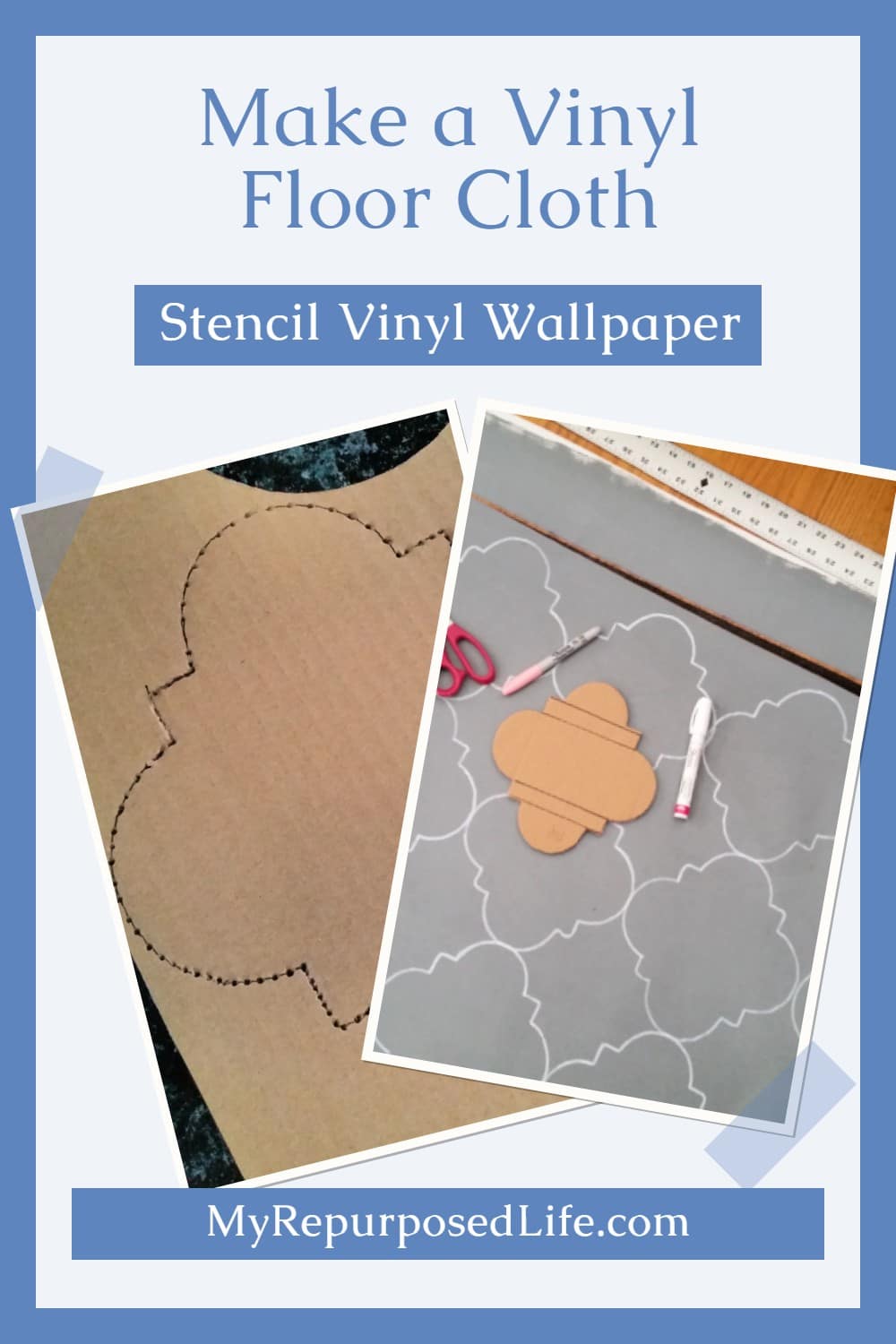
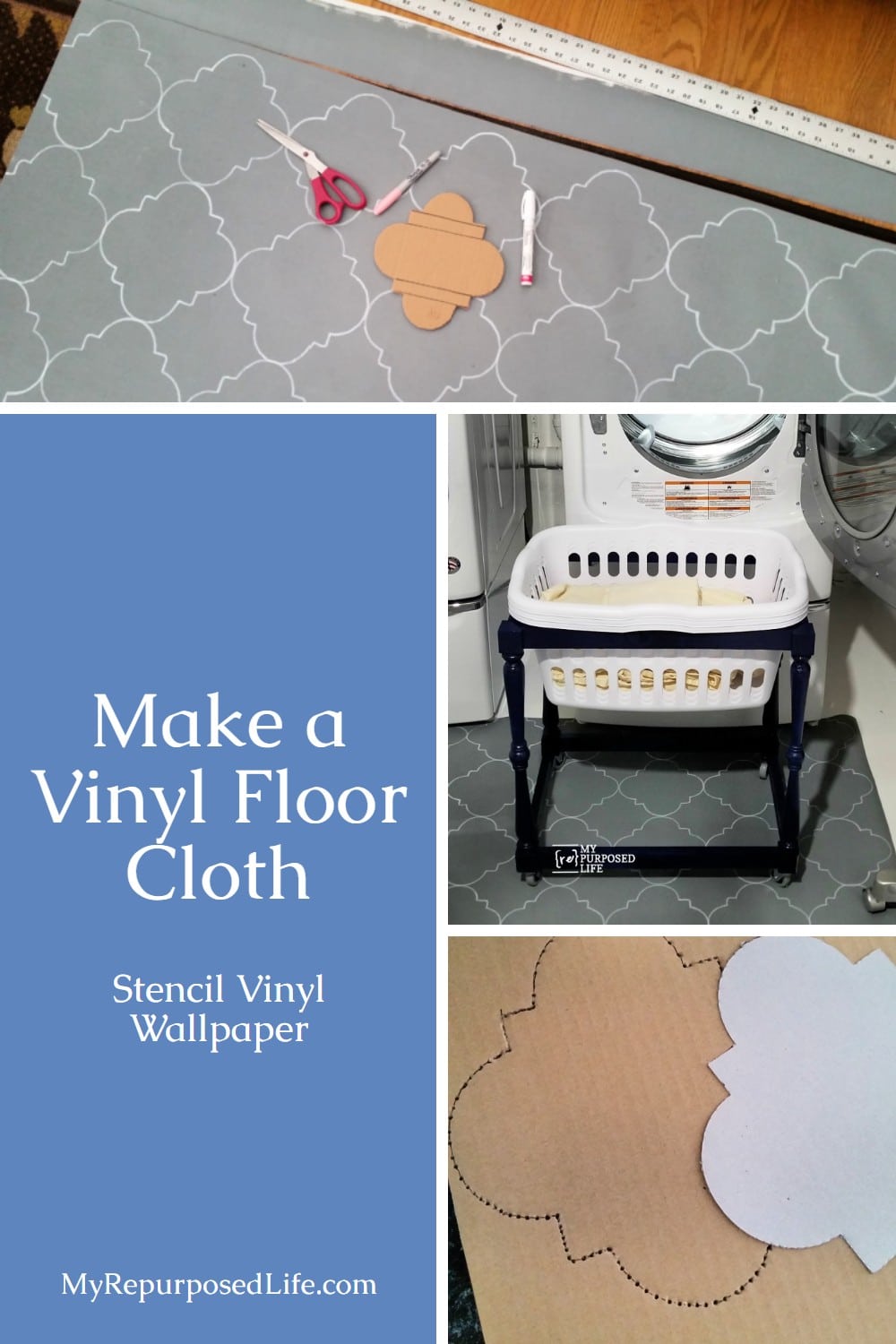
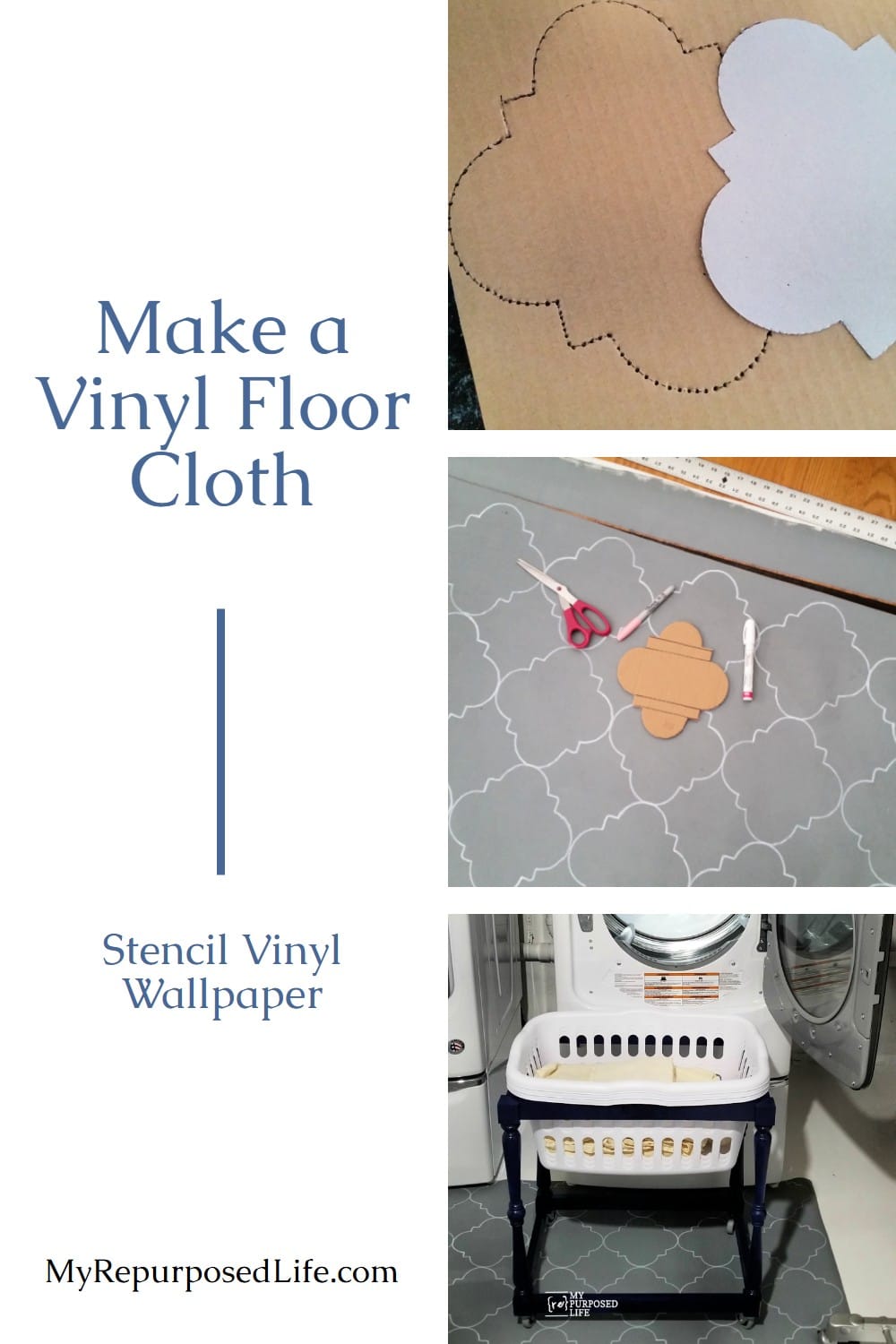
If you have ever wished you could add style and personality to your laundry room without spending a lot, this stenciled laundry room rug is the perfect project to try. Instead of buying a traditional rug, I made a custom floor cloth from vinyl wallpaper and painted a simple stenciled pattern to give the space a fresh look on a tight budget. This project is ideal for anyone who loves creative solutions and practical DIY updates because it makes the laundry room feel more custom without a big expense.
Using Vinyl Wallpaper as a Floor Cloth
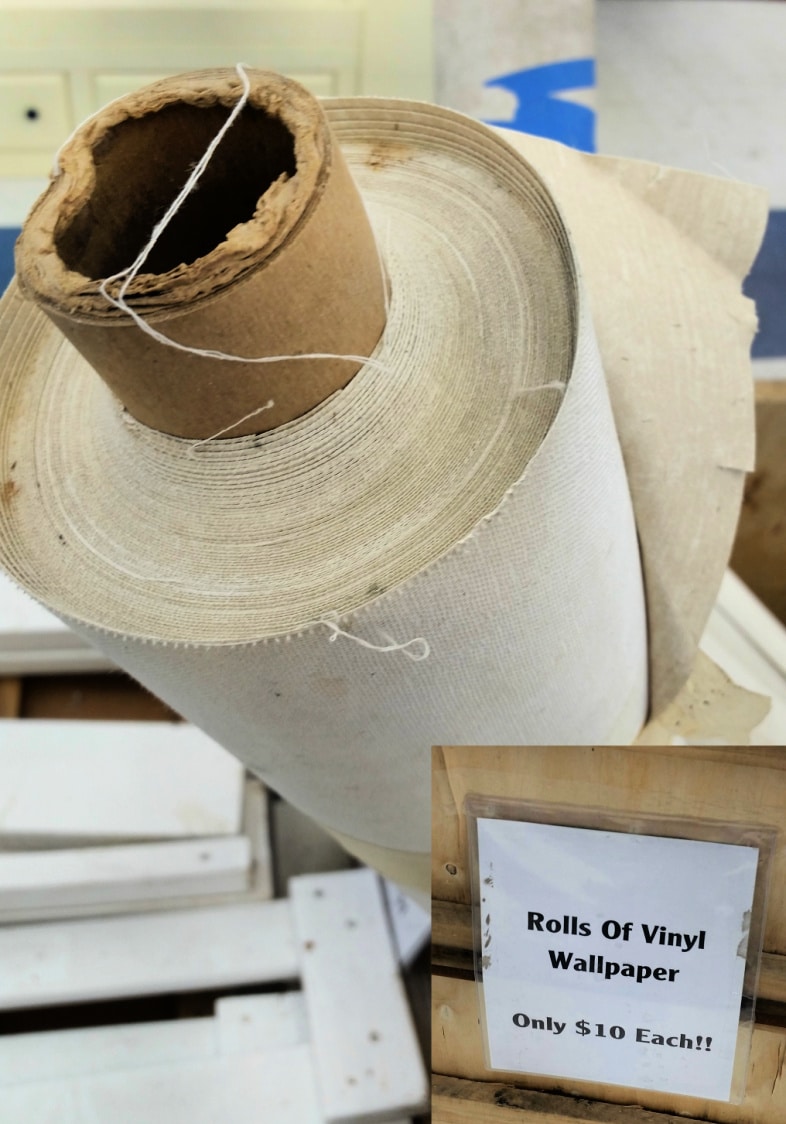
Look! This laundry room stenciled rug is made out of vinyl wallpaper!!! I bought this a couple of years ago at my local ReStore. It’s good for all sorts of handy uses. I’ve used it as a photo backdrop, as a drop cloth and more.
What Is a Floor Cloth?
A floor cloth is a painted or decorated fabric or vinyl mat that works as a lightweight, low-profile alternative to a traditional rug.
Historically, floor cloths were made from heavy canvas and coated with paint or sealant. People used them in the 18th and 19th centuries when woven rugs were expensive or hard to come by. Today, DIY floor cloths are often made from canvas, drop cloths, or even vinyl wallpaper (like this laundry room rug) and finished with paint and a protective topcoat.
Think of a floor cloth as a customizable, wipe-clean rug.
You create the pattern yourself using paint, stencils, or tape, then seal it so it holds up to everyday use.
Why Use a Floor Cloth Instead of a Regular Rug?
Floor cloths solve several common decorating problems:
• They are budget friendly
• You control the size, pattern, and colors
• They lay flat with no curled corners
• They clean easily with a damp cloth
• They work in rooms where fabric rugs struggle
They are especially handy in spaces where spills, pet accidents, or muddy shoes are part of daily life.
For DIYers, the real win is customization. You are not limited to store sizes or “Where You Can Use a Floor Cloth”.
Where Can You Use a Floor Cloth?
Floor cloths shine in practical spaces, but they can work almost anywhere. Here are some of my favorite spots:
- Laundry Room: This is where my stenciled rug really earns its keep. Floor cloths handle drips, detergent splashes, and foot traffic without soaking anything up.
- Kitchen
- Perfect for sink areas, coffee stations, or small galley kitchens. They wipe clean and stay put better than most throw rugs.
- Entryway or Mudroom
- Great for catching dirt and moisture without dealing with soggy fabric rugs. Just shake or wipe.
- Bathroom
- Ideal in front of vanities or tubs where water is common. They dry fast and do not get musty.
- Craft Room or Workshop
- Paint drips, glue spills, sawdust. No problem. Floor cloths protect your floors and clean up easily.
- Under Pet Bowls
- A small floor cloth makes a cute, functional feeding station that wipes clean in seconds.
- Porch or Covered Outdoor Areas
- As long as it stays mostly dry, a sealed floor cloth works nicely on porches or enclosed patios.
Now that you know all about Floor Cloths, let’s see how easy it is to make one to your specifications.
Paint the Vinyl Wallpaper
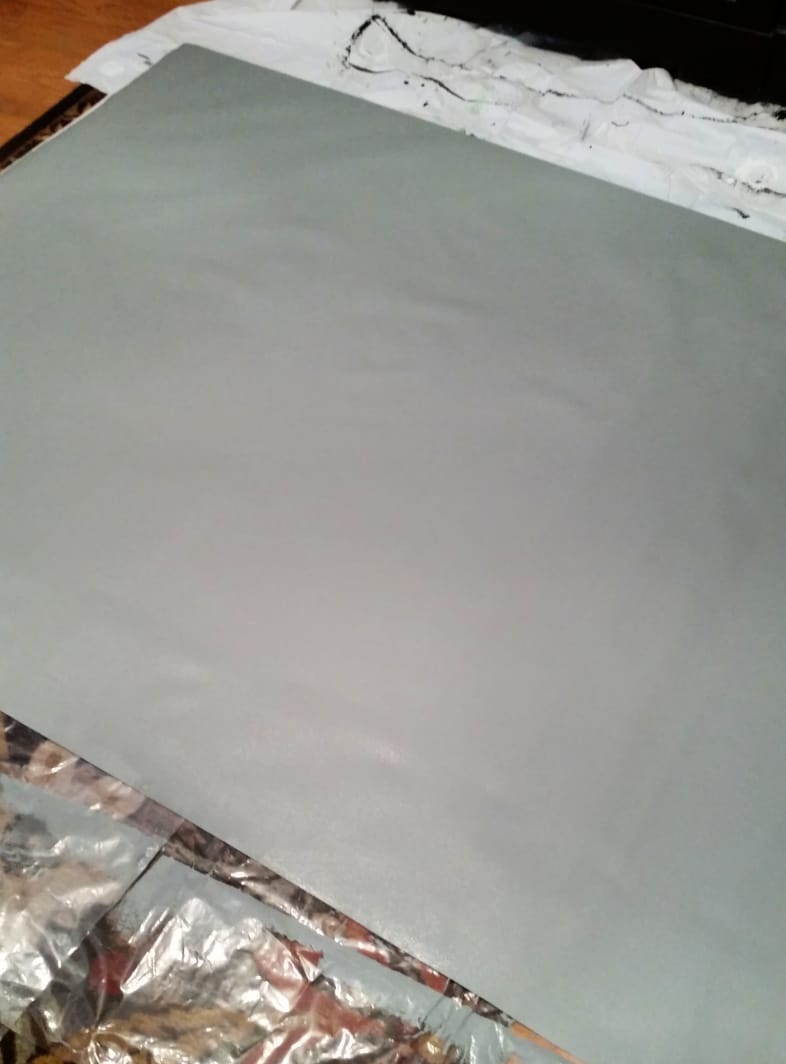
I painted the wrong side of the vinyl wallpaper with a small roller using an Oops gray I had on hand. Would you believe I put plastic down and actually painted this faux rug in the living room?
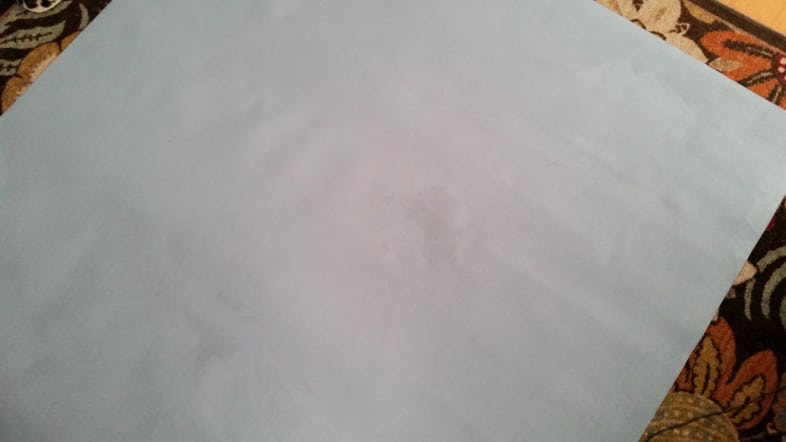
It looks okay, but let’s up the ante a little with a stencil.
Create a Cardboard Stencil
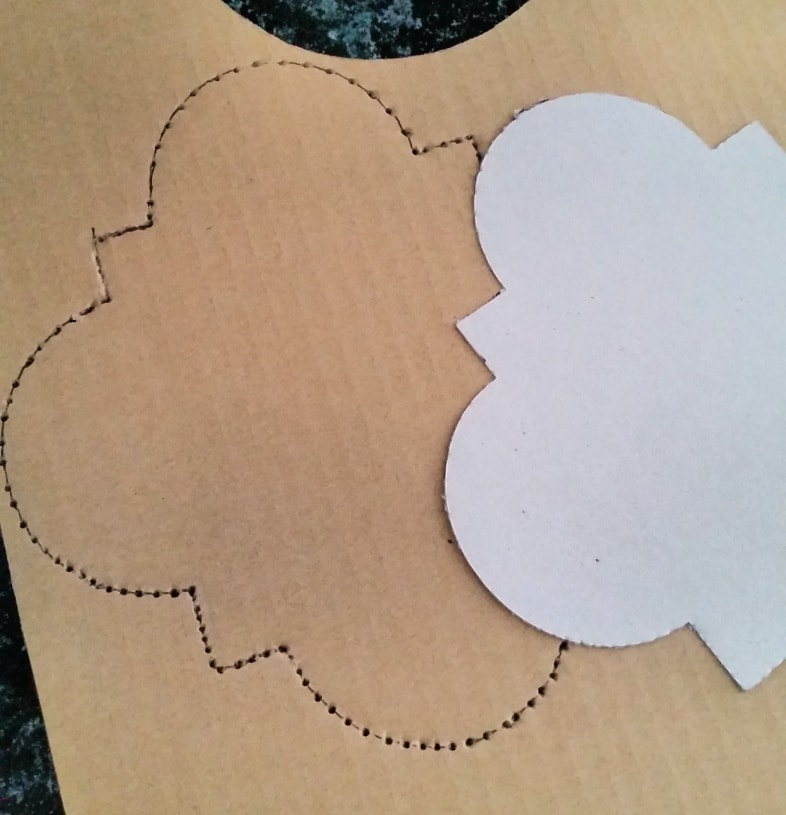
I made a quatrefoil stencil on paper, then used an ink pen to dot trace it onto heavy cardboard. Poking the holes in the cardboard made it easier to cut with my scissors.
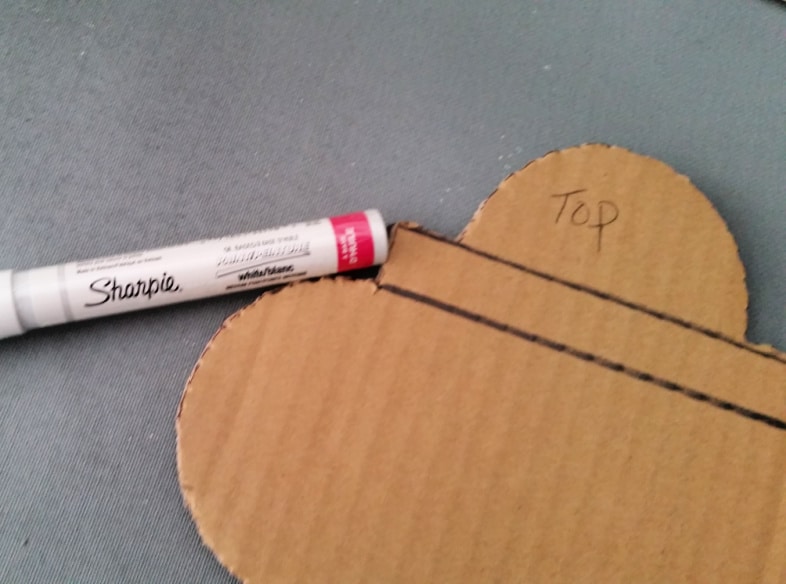
I marked the top of my stencil and traced it over and over again with an oil paint sharpie. This sounds easy, right?
Trace the Cardboard Stencil With a Paint Pen
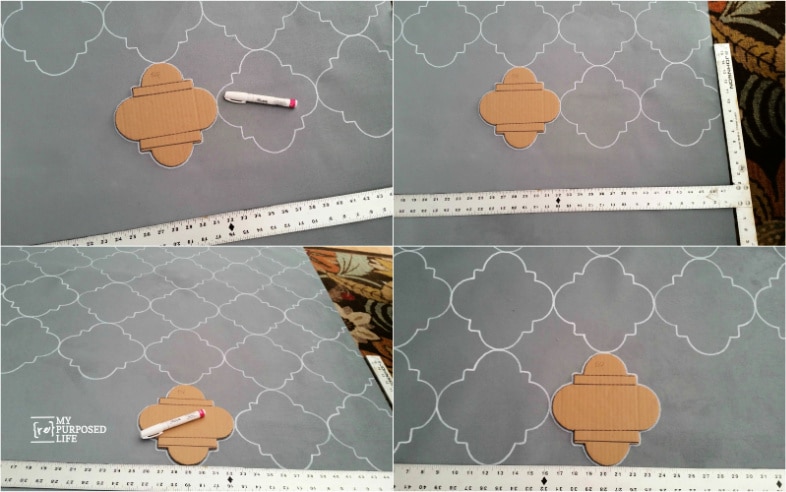
It seemed to take forever! It was probably a one Hallmark movie project.  If you ever watched Home & Family, you know what that means.
I used a large T-square to keep me on track. I also used it when I made my faux hardwood floor for photography.
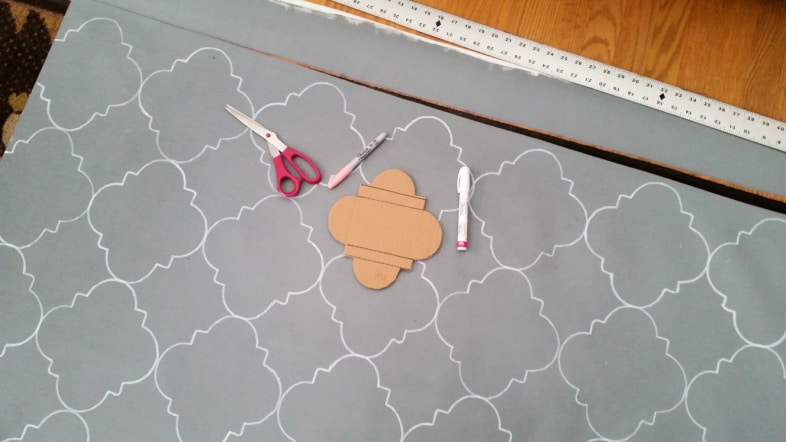
After I finished the last row of stenciling, I trimmed the vinyl wallpaper. I suppose it could be bound somehow, but I just left it as is.
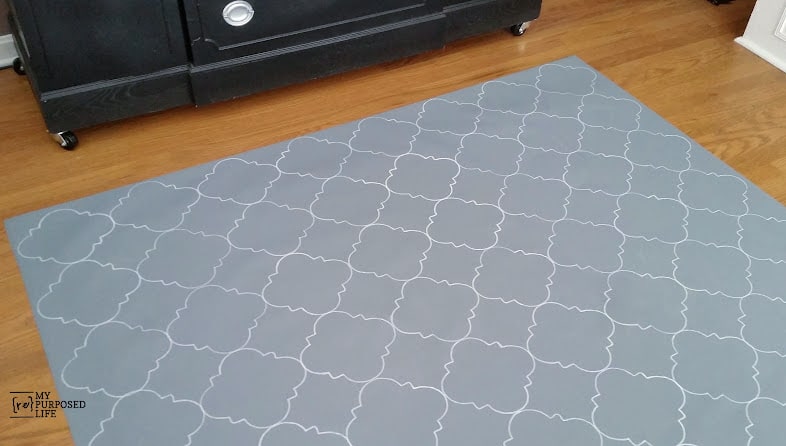
Vinyl Wallpaper Floor Cloth in Basement Laundry Area
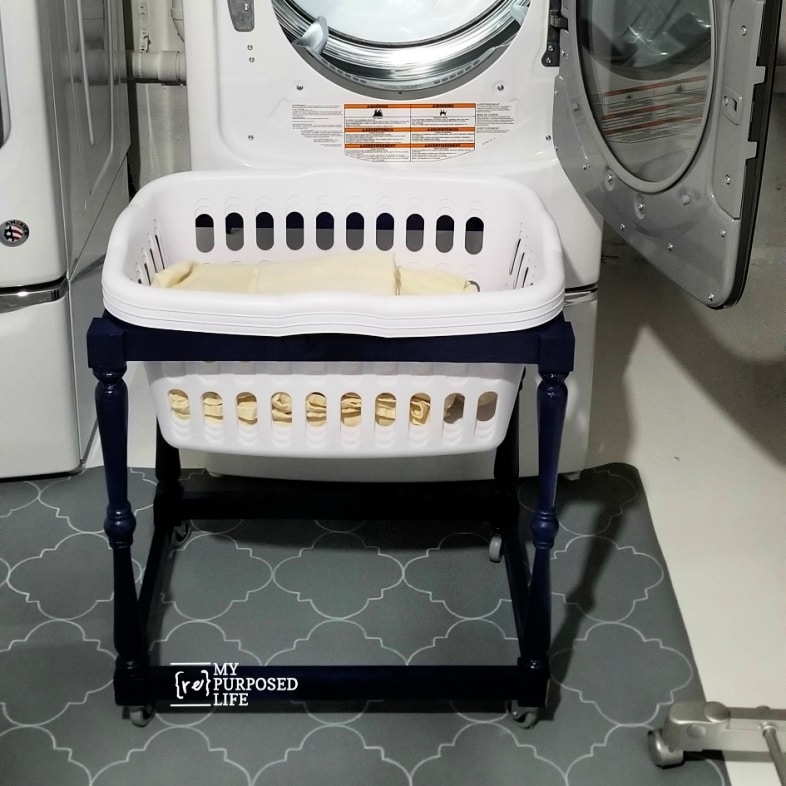
What Makes Floor Cloths So Practical
Unlike traditional rugs, floor cloths:
• Do not absorb moisture
• Do not trap odors
• Do not fray
• Do not need vacuuming
• Can be rolled up and stored
They are lightweight, portable, and surprisingly durable when sealed properly.
For busy homes (or creative mess-makers), they are a simple solution that looks intentional rather than temporary.
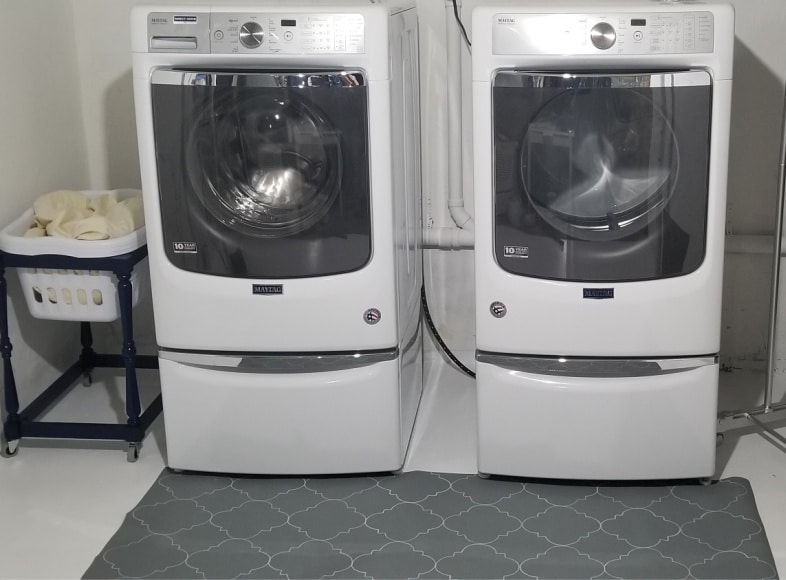
The stenciled faux rug is perfect for my new laundry space.
Being vinyl, I expect it to hold up against wear and tear, and any other mishaps that might happen in the basement. 
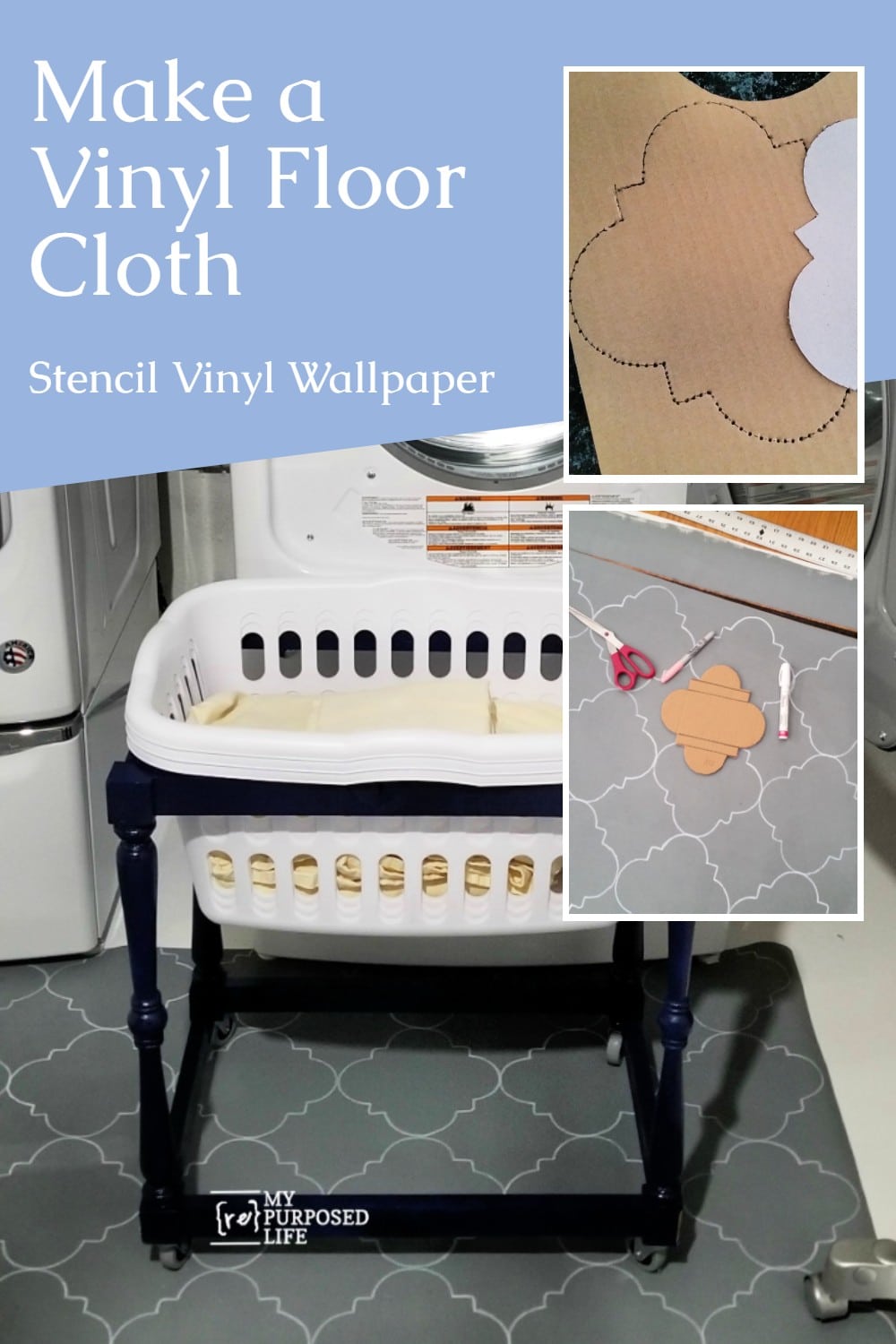
This stenciled laundry room rug may not be a conventional rug, but it gives your space a finished look that feels intentional and personal. Vinyl wallpaper holds up well and can withstand wear and tear in a high-traffic room like the laundry area, and creating your own stencil pattern lets you tailor the look to your taste. If you have ever shied away from rug projects because of cost or complexity, this DIY proves both hurdles can be overcome with a bit of creativity and simple materials
Have you ever stenciled a rug? What did you use? Would you have thought of using vinyl wallpaper?
gail
Related Content:
I love this project, what a great idea! Side note; I have an opportunity to buy a washer and dryer just like yours in the pictures for $400. How do you like them/have they held up well for you? I hope asking this here is ok, I don’t know how to contact you directly and I have been trying to find info on the machines for a while.
I emailed you. 🙂
I have made several floorcloths, but have never even considered using a vinyl wallpaper! What a great idea! I have always used pieces of vin;yl flooring and done free-hand work for designs. Thanks for the great tips!
Jeannie,
I can’t paint at all. But I have stenciled on vinyl flooring as floor cloths. I hope if you try the vinyl wallpaper as a floor cloth that it works for you.
gail
Gail,
I always enjoy seeing someone do a project that would suit my home. I, too, use my basement for laundry and it just has cinderblock walls and a cement floor. I work on most of my painting projects in the basement and while I appreciate having a spot inside that can’t be “harmed”, I also appreciate a cheerful place to work – iron, wash, dry, and fold laundry.” This is a spectacular project! Thanks so much for lending your expertise and describing your steps in such accurate words!
Barb,
Thank you so much for your kind comment. I can’t believe I’ve been doing the dreaded chore of laundry in the dark corner for over 42 years! I’m loving how much cheerier it already looks. 🙂
gail
Wow..you never seem to run out of amazing ideas! LOVE the DIY floor rug and was blown away by your poking holes in the heavy cardboard to make it cut easier. Pinned!!
thanks for the kind words Wendi, and I appreciate you pinning!!
gail
Once again, you taught me something so simple, yet my brain would never have thought of doing: Poking holes before cutting the cardboard. Makes so much sense!
p.s. the rug looks great!
So happy to help out Jen. Punching the holes makes it easier to stay on the lines. 🙂
happy crafting!
I absolutely love the rug. This was a great idea……..WOW!
Awesome Idea I recently had a new porch put on and this would be perfect for it!
I painted a canvas rug for the covered patio. Before I painted I spray glued foam shelf liner to the back and stitched the hem to catch the liner. That way it wouldn’t slip. I rolled on a coat of gesso, then a coat of white acrylic. With acrylic and a 1” artists brush I painted the outline of black flowers. I love when an outdoor project can be hosed and hung to dry.
I would have never thought of vinyl wallpaper. That’s brilliant
Your project sounds awesome Jennie! I wish I could “paint” like an artist. I can only use a roller and a chip brush. I can’t even master water color.
I’ve also used scrap vinyl flooring for floor cloths. The ideas are endless I suppose. 🙂
gail
Gail, Believe me everyone can draw and paint. You just have to find your style. My art is either cartoonish or abstract.
Clever!